Industry Trends & Insights
4
mins read
QS Started In The Desert, Not The Office
Ancient Egypt used measurement, planning, and control long before modern quantity surveying.
Ancient Egypt used measurement, planning, and control long before modern quantity surveying.
Ancient Egyptian construction was disciplined and systematic, echoing modern quantity surveying. Tools evolved, but measurement, control, and decision-making never changed.

Team ConInnova

Quantity surveying has a habit of being framed as a modern profession, something born out of spreadsheets, contracts, and commercial reporting, but it isn’t.
Long before the title existed, the function was already quietly working in the background of civilization. Nowhere is that clearer than ancient Egypt, where construction was delivered at a scale that still makes modern sites feel like they are improvising. The control, planning, and measurement behind those builds was not casual. It was systematic by design.

Sphinx and Giza Pyramids in Cairo, Egypt (Source: Image licensed via Shutterstock
The Egyptians built with consistency because they measured with consistency, using standard units like the ‘royal cubit’ to maintain accuracy across vast sites. Specialist surveyors, often called ‘rope stretchers’, re-established boundaries after the Nile’s annual flood reset the land each year. Precision was not optional. It was the system.
And once measurement becomes consistent, everything downstream starts to stabilise.
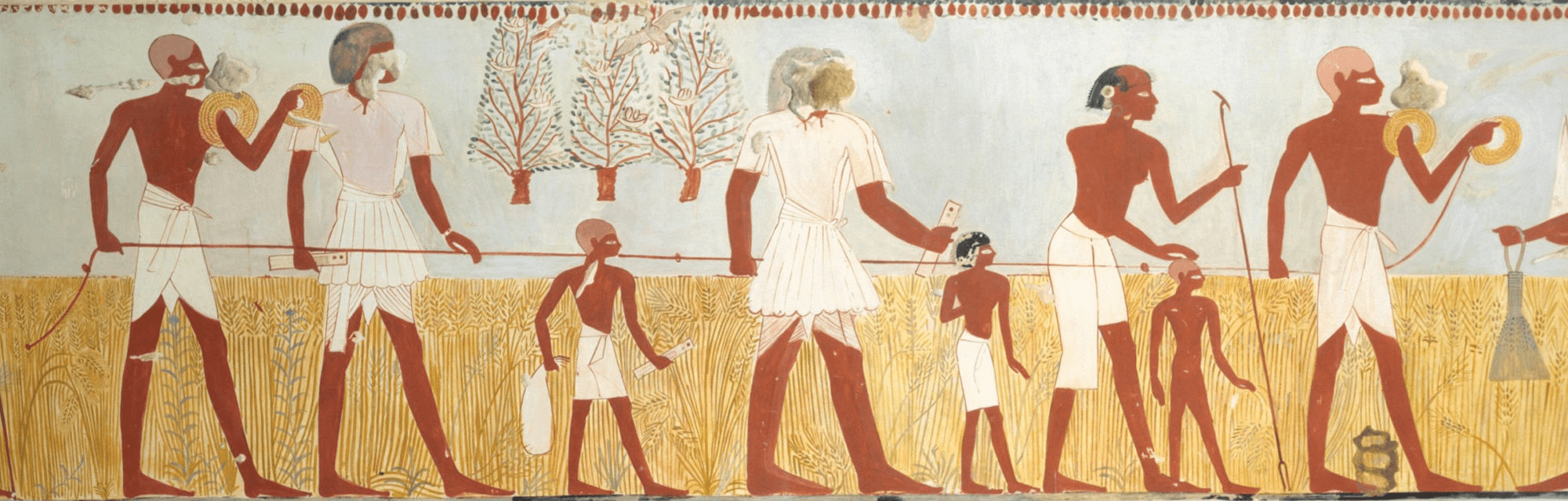
Egyptian rope stretchers (Source: American Surveyor)
The pyramids are the clearest example. Not mysteries, but coordinated industrial-scale projects. Millions of stone blocks had to be quarried, transported, and assembled over long periods of time. That level of production does not run on instinct, it runs on knowing exactly what is needed, where it comes from, and how it is used.
They did not call it a takeoff, but the thinking was already there. Quantities were understood, organised, and controlled in a way that would feel familiar to anyone working in construction today.
The same logic carried through into labour and logistics. Egyptian scribes acted like early project administrators, tracking workforce activity, material movement, and supply chains. The ‘Diary of Merer’ reads like a construction log centuries ahead of its time, recording how stone moved from quarry to site. Workers were also paid in measured rations of grain, bread, and beer, allocated by role and output. Inputs measured, outputs tracked, and nothing left to chance.
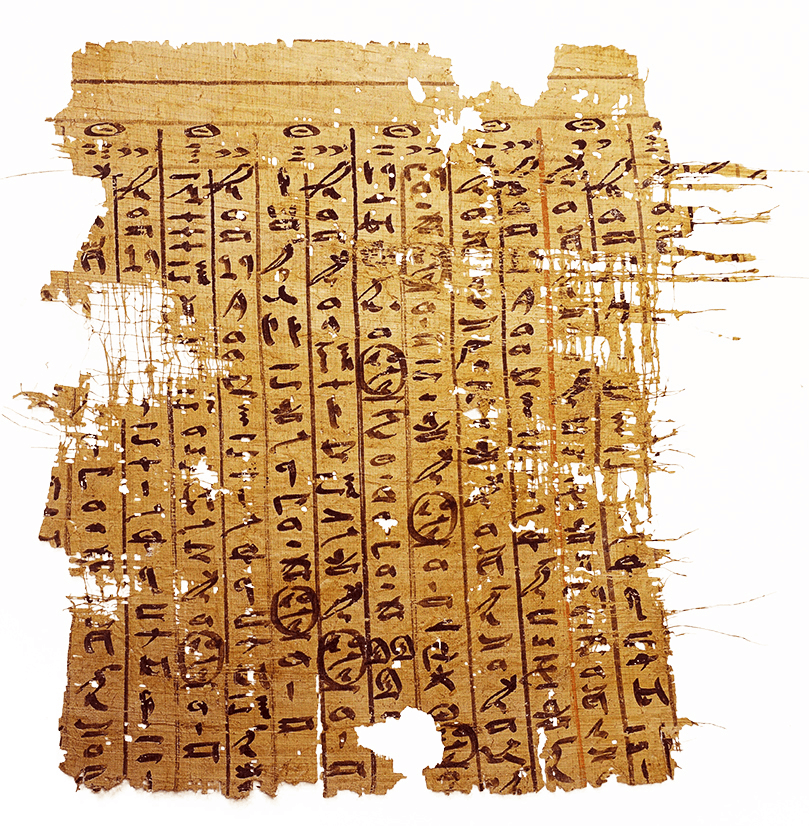
The Diary of Merer (Source: Timeless Travels magazine)
That is the core of quantity surveying. Not the software, not the title, not the modern packaging, but the discipline of measurement, control, and clarity that keeps projects buildable.
The purpose has not changed. Only the tools have. From rope lines to digital models, from papyrus records to data platforms, the method evolves while the principle stays fixed.
Quantity surveying did not begin with modern construction. It has simply always been there, quietly doing the same job, keeping projects grounded in measurable reality while everything around it keeps evolving.
Quantity surveying has a habit of being framed as a modern profession, something born out of spreadsheets, contracts, and commercial reporting, but it isn’t.
Long before the title existed, the function was already quietly working in the background of civilization. Nowhere is that clearer than ancient Egypt, where construction was delivered at a scale that still makes modern sites feel like they are improvising. The control, planning, and measurement behind those builds was not casual. It was systematic by design.
Sphinx and Giza Pyramids in Cairo, Egypt (Source: Image licensed via Shutterstock
The Egyptians built with consistency because they measured with consistency, using standard units like the ‘royal cubit’ to maintain accuracy across vast sites. Specialist surveyors, often called ‘rope stretchers’, re-established boundaries after the Nile’s annual flood reset the land each year. Precision was not optional. It was the system.
And once measurement becomes consistent, everything downstream starts to stabilise.
Egyptian rope stretchers (Source: American Surveyor)
The pyramids are the clearest example. Not mysteries, but coordinated industrial-scale projects. Millions of stone blocks had to be quarried, transported, and assembled over long periods of time. That level of production does not run on instinct, it runs on knowing exactly what is needed, where it comes from, and how it is used.
They did not call it a takeoff, but the thinking was already there. Quantities were understood, organised, and controlled in a way that would feel familiar to anyone working in construction today.
The same logic carried through into labour and logistics. Egyptian scribes acted like early project administrators, tracking workforce activity, material movement, and supply chains. The ‘Diary of Merer’ reads like a construction log centuries ahead of its time, recording how stone moved from quarry to site. Workers were also paid in measured rations of grain, bread, and beer, allocated by role and output. Inputs measured, outputs tracked, and nothing left to chance.
The Diary of Merer (Source: Timeless Travels magazine)
That is the core of quantity surveying. Not the software, not the title, not the modern packaging, but the discipline of measurement, control, and clarity that keeps projects buildable.
The purpose has not changed. Only the tools have. From rope lines to digital models, from papyrus records to data platforms, the method evolves while the principle stays fixed.
Quantity surveying did not begin with modern construction. It has simply always been there, quietly doing the same job, keeping projects grounded in measurable reality while everything around it keeps evolving.




Industry Trends & Insights
4
mins read
QS Started In The Desert, Not The Office
Ancient Egypt used measurement, planning, and control long before modern quantity surveying.
Ancient Egyptian construction was disciplined and systematic, echoing modern quantity surveying. Tools evolved, but measurement, control, and decision-making never changed.
Team ConInnova
Quantity surveying has a habit of being framed as a modern profession, something born out of spreadsheets, contracts, and commercial reporting, but it isn’t.
Long before the title existed, the function was already quietly working in the background of civilization. Nowhere is that clearer than ancient Egypt, where construction was delivered at a scale that still makes modern sites feel like they are improvising. The control, planning, and measurement behind those builds was not casual. It was systematic by design.
Sphinx and Giza Pyramids in Cairo, Egypt (Source: Image licensed via Shutterstock
The Egyptians built with consistency because they measured with consistency, using standard units like the ‘royal cubit’ to maintain accuracy across vast sites. Specialist surveyors, often called ‘rope stretchers’, re-established boundaries after the Nile’s annual flood reset the land each year. Precision was not optional. It was the system.
And once measurement becomes consistent, everything downstream starts to stabilise.
Egyptian rope stretchers (Source: American Surveyor)
The pyramids are the clearest example. Not mysteries, but coordinated industrial-scale projects. Millions of stone blocks had to be quarried, transported, and assembled over long periods of time. That level of production does not run on instinct, it runs on knowing exactly what is needed, where it comes from, and how it is used.
They did not call it a takeoff, but the thinking was already there. Quantities were understood, organised, and controlled in a way that would feel familiar to anyone working in construction today.
The same logic carried through into labour and logistics. Egyptian scribes acted like early project administrators, tracking workforce activity, material movement, and supply chains. The ‘Diary of Merer’ reads like a construction log centuries ahead of its time, recording how stone moved from quarry to site. Workers were also paid in measured rations of grain, bread, and beer, allocated by role and output. Inputs measured, outputs tracked, and nothing left to chance.
The Diary of Merer (Source: Timeless Travels magazine)
That is the core of quantity surveying. Not the software, not the title, not the modern packaging, but the discipline of measurement, control, and clarity that keeps projects buildable.
The purpose has not changed. Only the tools have. From rope lines to digital models, from papyrus records to data platforms, the method evolves while the principle stays fixed.
Quantity surveying did not begin with modern construction. It has simply always been there, quietly doing the same job, keeping projects grounded in measurable reality while everything around it keeps evolving.